

The digital world never stands still. As technology evolves and user expectations continue to rise, websites are becoming faster, smarter and more immersive than ever before. In 2026, successful digital experiences won’t simply look beautiful—they’ll anticipate user needs, personalise content and create meaningful interactions that leave lasting impressions.
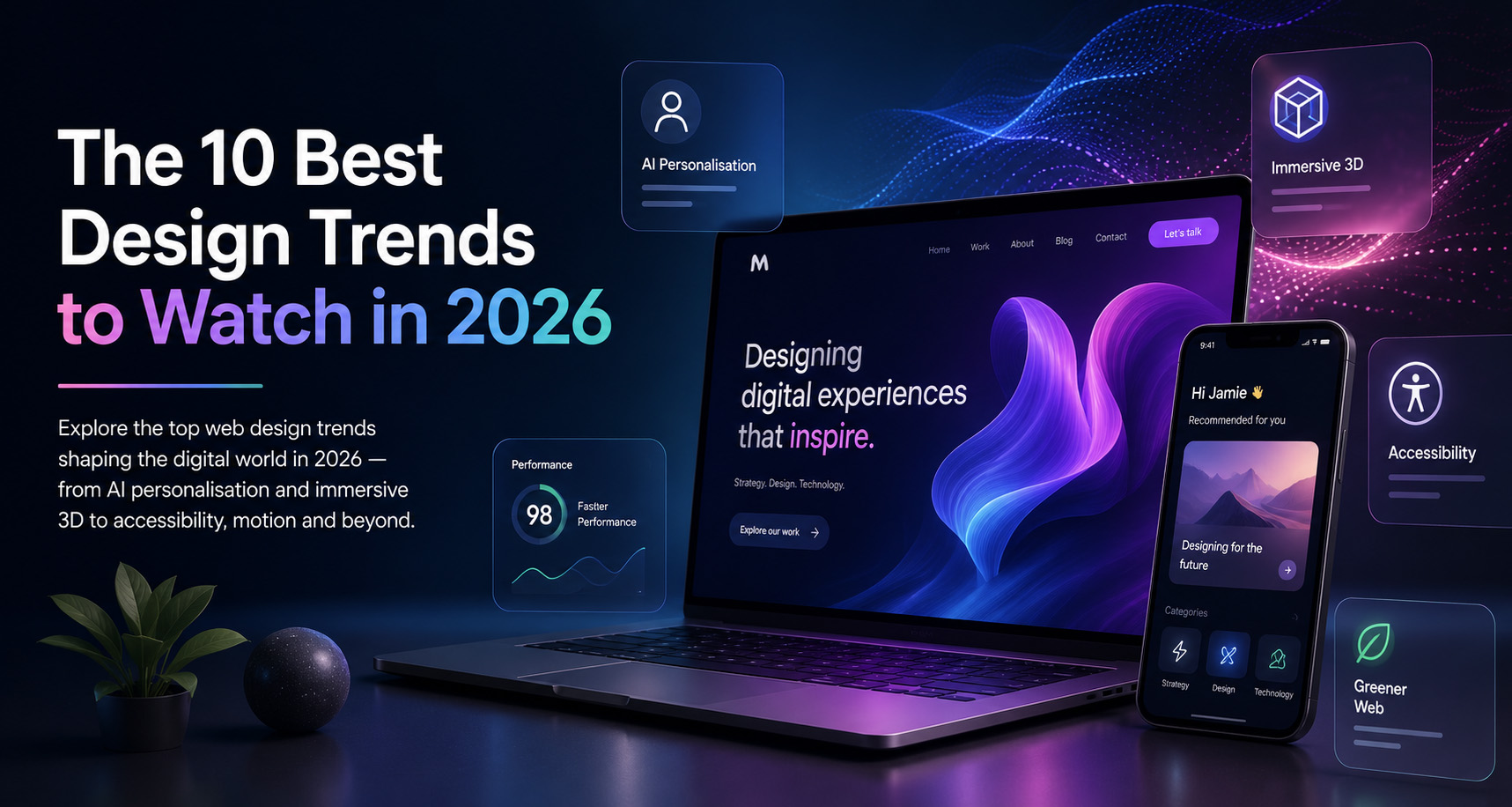
Whether you’re planning a complete redesign or simply looking to modernise your online presence, these are the ten design trends set to shape the web in 2026.
1. AI-Powered Personalisation
Artificial intelligence is moving beyond chatbots and becoming deeply integrated into the browsing experience. Websites are beginning to adapt in real time, changing layouts, recommending content and tailoring calls-to-action based on visitor behaviour.
Imagine a homepage that looks different for a returning customer than it does for a first-time visitor. AI is making that possible.
Why it matters:
- More relevant user journeys
- Increased engagement
- Higher conversion rates
- Better customer satisfaction
2. Bold Minimalism
Minimalism isn’t disappearing—it’s becoming bolder.
Designers are embracing generous white space alongside oversized typography, striking imagery and confident colour palettes. Every element serves a purpose, creating interfaces that feel clean yet full of personality.
Less clutter means users can focus on what really matters.
3. Immersive 3D Experiences
Advances in browser technology are making high-quality 3D graphics more accessible than ever.
From interactive product showcases to animated illustrations, 3D elements create memorable experiences without sacrificing performance.
Expect to see:
- Interactive product visualisations
- Floating interface elements
- Animated backgrounds
- Scroll-driven 3D storytelling
4. Motion That Guides Rather Than Distracts
Animation is becoming more purposeful.
Instead of flashy effects, subtle transitions help users understand navigation, highlight important actions and create smoother interactions.
Micro-interactions—such as animated buttons, loading states and hover effects—make websites feel polished and responsive.
Good animation should feel almost invisible, enhancing usability rather than competing for attention.
5. Accessibility by Design
Accessibility is no longer an afterthought.
Inclusive design is becoming an essential part of every project, ensuring websites work for everyone regardless of ability.
Modern accessible websites include:
- High colour contrast
- Clear typography
- Keyboard navigation
- Screen reader compatibility
- Meaningful alternative text
- Accessible forms
Designing for accessibility benefits every visitor—not just those with disabilities.
6. Smarter Colour Systems
Brands are moving beyond fixed colour palettes towards adaptive design systems.
Websites can now automatically adjust colours based on:
- Dark or light mode
- User preferences
- Time of day
- Seasonal campaigns
- Brand events
Dynamic colour systems create more engaging experiences while maintaining brand consistency.
7. Storytelling Through Scroll
Scrolling has become an experience in itself.
Rather than presenting information in static sections, websites are using layered animations, sticky content and cinematic transitions to guide visitors through a compelling narrative.
This approach is particularly effective for:
- Agency websites
- Product launches
- Healthcare innovation
- Technology companies
- Premium brands
8. Human-Centred Photography
Authenticity continues to outperform stock imagery.
Brands are investing in real photography that showcases genuine people, workplaces and experiences.
Natural lighting, candid moments and diverse representation help build trust and create emotional connections with visitors.
People buy from people—not generic stock photos.
9. Faster, Greener Websites
Performance is becoming a competitive advantage.
Users expect websites to load instantly, while organisations are becoming increasingly aware of digital sustainability.
Modern optimisation includes:
- Lightweight code
- Next-generation image formats
- Intelligent caching
- Efficient animations
- Reduced server requests
A faster website delivers better user experiences while reducing its environmental impact.
10. Digital Experiences That Feel Personal
The best websites in 2026 won’t simply provide information—they’ll build relationships.
Whether through AI assistants, personalised content, interactive tools or intuitive user journeys, digital experiences are becoming more conversational and genuinely helpful.
Visitors increasingly expect websites to understand their needs rather than forcing them to search endlessly for information.
The organisations that succeed will be those that focus less on selling and more on helping.
Looking Ahead
The future of web design isn’t about chasing trends—it’s about creating experiences that are faster, more accessible and genuinely useful.
Artificial intelligence, thoughtful motion, immersive storytelling and user-centred design are transforming websites from static pages into intelligent digital experiences.
As these trends continue to mature throughout 2026, the organisations that embrace innovation while keeping people at the centre of every decision will stand out from the competition.
The best websites won’t simply look modern—they’ll feel effortless to use, memorable to visit and valuable to every person who lands on them.

